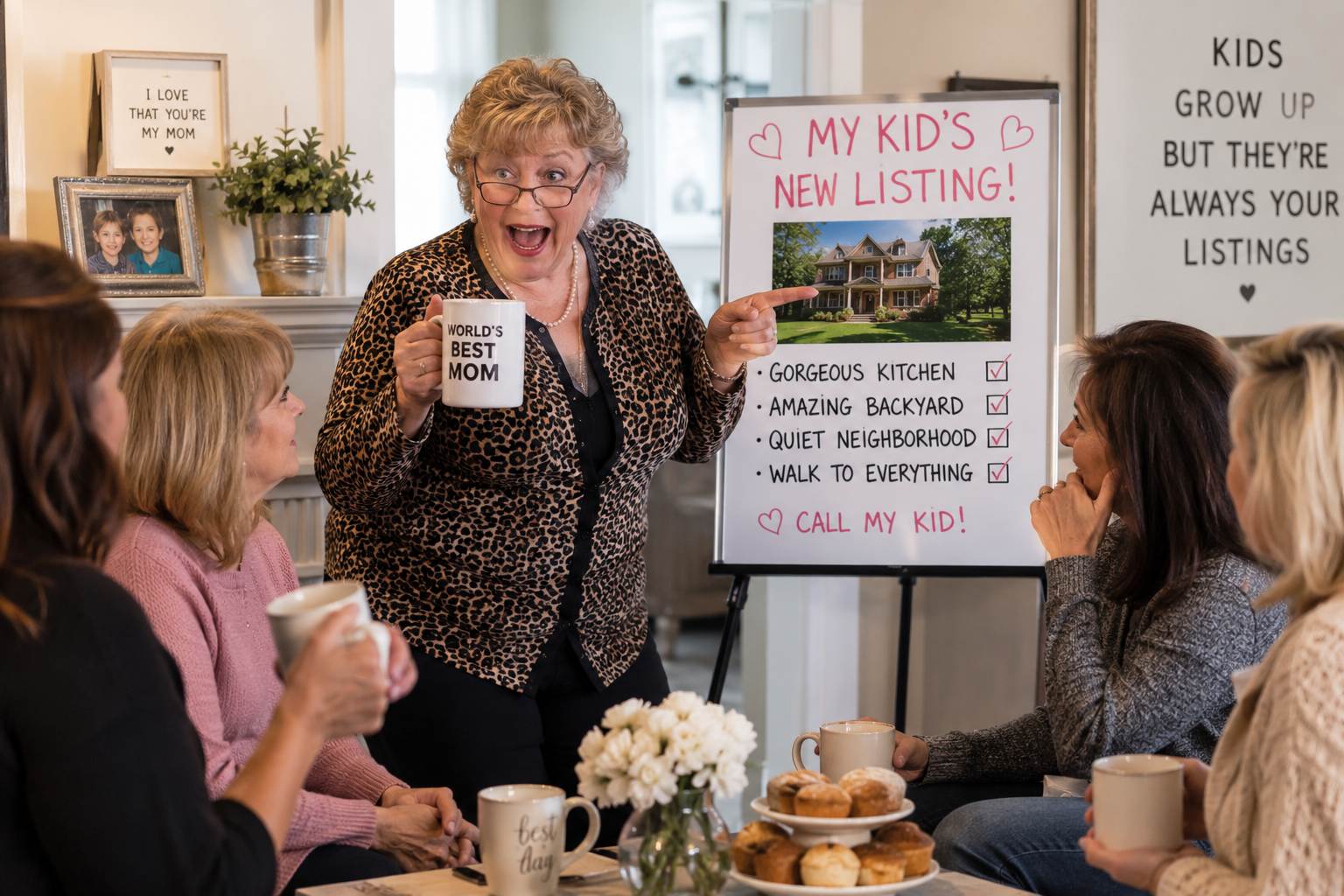
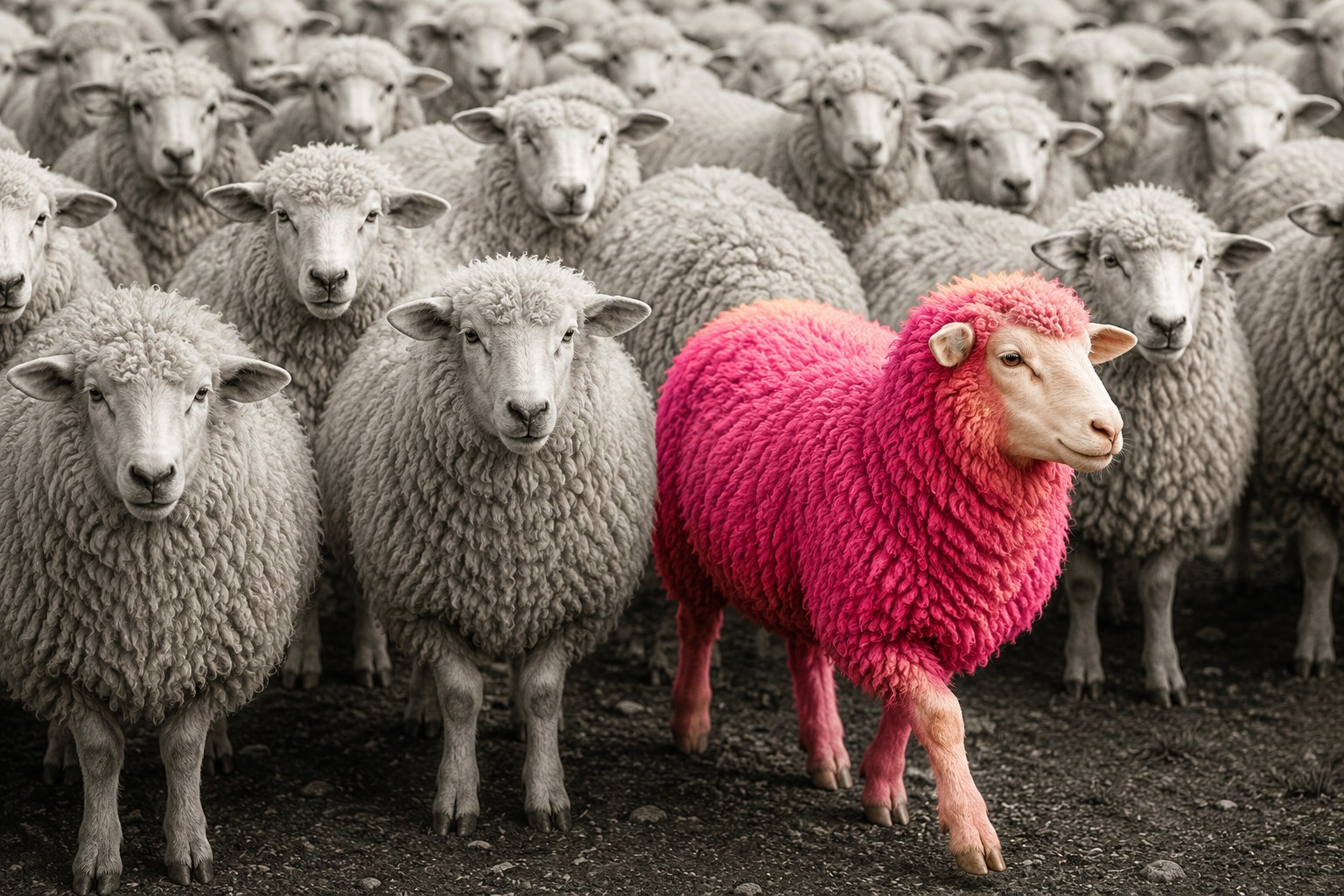
There is an unwritten rule in life that starts when we're kids: don't be too loud, don't make a scene, don't wear something weird, don't raise your hand too much, don't stand out.
For the most part, it's good advice. Society works because most of us understand how to take turns, read the room, and avoid becoming that person everyone secretly hopes doesn't show up to dinner.
The funny thing is, those same instincts are absolutely terrible for marketing.
Marketing asks us to do something that feels deeply unnatural. It asks us to stand apart from the crowd while every instinct we have is quietly whispering, "Maybe just blend in a little." And so we do.
We soften our opinions. We borrow someone else's style. We use the same fonts, the same colors, the same Canva templates, and the same captions everyone else is posting. We scroll social media looking for inspiration and somehow end up creating another version of what we've already seen.
Somewhere between "building a brand" and "trying not to offend anybody," we accidentally invent something else entirely. I call it blanding—branding that's been sanded down until there's nothing memorable left.
Everything is pleasant. Everything is polished. Everything is... remarkably forgettable.
This pattern appears everywhere. It shows up in real estate, but it is not limited to agents. Just look at law firms. Even people trying to become social media influencers somehow end up looking exactly like every other influencer they're following.
The goal isn't to look like everyone else who's successful. The goal is to become memorable enough that people stop comparing you to everyone else. That is a much harder assignment.
Consider a hypothetical
Imagine I announced tomorrow that I was leaving real estate to become a stand-up comedian. Anyone who knows me would worry. It's just not who I am.
Now imagine I decided to speed things along by asking artificial intelligence to write all my jokes. Sorry, Crowd.
The point isn't that AI can't be useful—I use it almost every day. The point is that AI doesn't know what actually makes people laugh in my voice. It doesn't know my timing, my experiences, or the stories that make my friends laugh until they can't breathe. It can help me organize ideas. It can't manufacture a personality.
Neither can Canva.
Somewhere along the way, we've convinced ourselves that marketing mostly involves sitting in front of a computer dragging text boxes around a screen. That's graphic design. Marketing existed long before someone chose between dusty blue and sage green.
If graphic design isn't your strength, don't spend eight hours trying to become a designer overnight. Find another way to tell your story or hire someone who loves doing that part. We all have different gifts, and pretending otherwise usually produces work that looks... well... homemade in the wrong way.
The real work of marketing happens before you ever open a design program. It starts by asking harder questions: What do you actually believe? What do you genuinely enjoy talking about? What makes your approach different? What stories do you keep telling because they're true? What do clients say about you when you're not in the room? Yeah. You'll probably have to ask them in order to get it right.
Those answers are your brand. Everything else is packaging.
One of the biggest traps
One of the biggest traps is the amount of time spent studying what everyone else is doing. Then, inevitably, we become everyone else. We watch the top producer. We save Instagram posts. We bookmark websites. We ask AI to write something "like this." Then we're surprised when our marketing feels dull.
Of course it does. It's assembled from pieces of other people's personalities.
A different approach is possible. Figure out what you think before you figure out what everyone else thinks. Sometimes that leads to the same conclusion. Sometimes it doesn't. Either way, at least it's yours.
Avoiding trends is not about believing they are inherently bad. It is about recognizing that by the time everyone is doing them, they have usually stopped being interesting.
Think about the last advertisement
Think about the last advertisement, billboard, or social media post that genuinely made you stop scrolling. It probably wasn't because it followed all the rules. It probably surprised you. Maybe it was funny. Maybe it was beautifully designed. Maybe it told a story you hadn't heard before. Maybe it simply sounded like an actual human being instead of a committee trying very hard not to offend anyone.
Those moments matter. Pay attention to them. Ask why they caught your attention. What made them different? What emotion did they create? Those observations are worth far more than copying the latest trend.
Here is a belief that may sound harsh at first: most people don't have a branding problem. They have an originality problem. Not because they aren't creative, but because they're constantly looking sideways.
Originality doesn't come from trying to be different for the sake of being different. It comes from paying close enough attention to your own experiences that you notice what only you can contribute. That is a more sustainable strategy than chasing whatever happens to be popular this week.
The businesses that stand out share common traits. They have opinions. They have quirks. They have a sense of humor. They have a point of view. Sometimes they even have rough edges. Ironically, those imperfections are often what make them memorable.
Perfect is forgettable. Interesting is unforgettable.
Perhaps that is why the question is not what is trending today, but what is interesting today. Those are not the same question.
Marketing is not about becoming louder than everyone else. It is not about chasing algorithms or collecting followers. It is about giving people something worth remembering.
The safest marketing disappears into the background because it was designed to offend no one, surprise no one, and challenge no one. The brands that endure are the ones that had the courage to sound like themselves.
You don't need to become a different person to build a memorable brand. You simply need to stop hiding the one you've already got.
That might just be the bravest marketing strategy of all.